

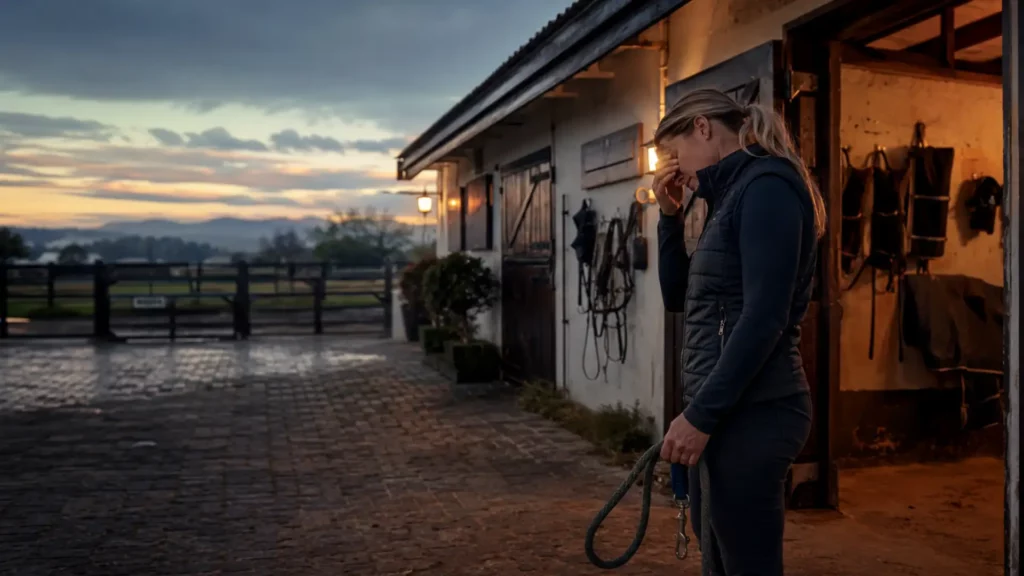
If you own a horse in South Africa, you already understand something non-horse people rarely appreciate: horses are not simply possessions. They are years of training, trust, discipline, financial investment, and emotional connection wrapped into a single animal. Which is exactly why the rise in horse theft South Africa owners are facing during 2026 has become one of the most emotionally devastating realities in the local equestrian industry.
Additionally, theft no longer affects only high-profile competition yards or elite breeding operations. Leisure riders, smallholdings, riding schools, polo owners, breeders, and private horse owners across Gauteng, KwaZulu-Natal, the Western Cape, and the Free State are all experiencing increasing concern around equine theft and equestrian crime.
At the same time, the financial impact of losing a horse continues rising sharply. A well-bred competition horse, endurance mount, polo pony, or breeding mare can represent hundreds of thousands — and sometimes millions — of rand in value.
Consequently, more South African horse owners are turning toward specialist equine insurance not only for veterinary emergencies, but also for theft protection, mortality cover, tack insurance, and transport-related risks.
This guide explores the reality of horse theft South Africa owners face during 2026, why equestrian crime is becoming a growing concern, and how Equi-Cover helps protect both horses and long-term equestrian investment.
Why Horse Theft Is Becoming a Growing Concern in South Africa
South Africa has always experienced challenges around livestock theft. However, the equestrian industry now faces increasing pressure as organised criminal activity expands beyond traditional livestock targeting.
In practical terms, horses are vulnerable for several reasons:
- Many horses are kept on rural or semi-rural properties
- Competition horses travel extensively throughout South Africa
- High-value tack and horseboxes attract criminals
- Stud farms often house valuable breeding stock
- Stable security differs between properties
- Social media visibility can expose valuable horses publicly
Some horses also become highly identifiable within equestrian communities because of show success, breeding value, or online exposure. Unfortunately, greater visibility can increase operational risk.
Meanwhile, economic pressure throughout South Africa continues affecting rural crime, transport theft, and opportunistic criminal activity. As a result, horse owners increasingly require stronger security awareness and specialist insurance protection.
The Emotional Reality of Horse Theft
Horse theft differs emotionally from many other insurance claims because the loss becomes deeply personal. A horse is rarely viewed purely as an asset. Instead, many owners see horses as companions, sporting partners, family members, and emotional anchors.
Unlike a stolen vehicle or electronic device, horses develop routines, personalities, behavioural patterns, and emotional relationships with their owners.
Furthermore, owners often spend years building trust through training, rehabilitation, travel, and competition preparation. The disappearance of a horse therefore creates emotional trauma that extends far beyond financial loss alone.
This emotional reality explains why specialist equine insurance South Africa owners trust has become increasingly important during 2026.
How Horse Theft South Africa Insurance Cover Works
Many horse owners mistakenly assume equine insurance only applies to veterinary emergencies or accidental death. However, comprehensive equine cover often includes theft protection through mortality insurance structures.
At Equi-Cover, specialist equine policies can help protect horse owners through:
- Horse mortality cover
- Theft protection
- Tack and equipment insurance
- Horsebox insurance
- Public liability cover
- Competition horse insurance
- Transit-related cover
- Breeding extensions
Consequently, specialist equine insurance helps reduce the financial shock that often follows major theft-related losses.
Horse Mortality and Theft Cover
Mortality insurance for horses forms the foundation of many comprehensive equine insurance policies. Importantly, several South African equine policies include theft as part of mortality-related protection.
In practical terms, owners may receive compensation based on the insured value of the horse if theft conditions under the policy are met.
This protection becomes especially important for competition horses, breeding stock, polo ponies, endurance horses, dressage horses, showjumpers, and stud stallions.
Specialist insurers also understand that horse valuations involve far more than original purchase price alone. Bloodline quality, training level, breeding potential, competition history, and future performance value all contribute toward realistic equine valuation.
Years of emotional investment, training, and competition preparation eventually become part of a horse’s true value as well. Consequently, specialist equine insurance remains essential for protecting both financial and emotional investment.
Across South Africa, premium competition horses now travel extensively between events, breeding facilities, and training environments. As a result, owners increasingly require broader protection against theft, transport incidents, and operational risks.
Horse Theft South Africa Risks During Transport
South African horse owners travel more frequently than ever before. National shows, endurance rides, polo tournaments, dressage events, and breeding operations regularly require horses to move across provinces.
Every kilometre introduces additional exposure:
- Road accidents
- Hijacking risks
- Horsebox theft
- Stable break-ins at events
- Temporary yard vulnerabilities
- Transit injuries
Therefore, horse transit insurance and specialist competition horse cover continue becoming more relevant across South Africa during 2026.
Which Horse Owners Face the Highest Theft Exposure?
Not every horse owner faces identical risk levels. Certain sectors within the equestrian industry naturally experience greater theft exposure because of horse value, visibility, travel frequency, or operational location.
Competition horse owners often carry the highest overall exposure because horses travel frequently and attract public attention through events and social media.
Stud farms also face elevated risk because of breeding value. A proven stallion or elite broodmare can represent years of selective breeding and future income potential.
Polo and endurance operations frequently move multiple horses over long distances, increasing transport-related exposure and operational vulnerability.
Riding schools and equestrian centres often manage larger horse populations, multiple staff members, visiting riders, and public-facing facilities, all of which create additional operational complexity.
However, even leisure horse owners should never assume they are exempt from risk. Theft and equestrian crime increasingly affect ordinary horse owners across South Africa.
Practical Ways to Reduce Horse Theft Risk
Insurance remains essential, but prevention still matters enormously. Most specialist equine insurers encourage owners to combine comprehensive cover with strong practical security measures.
Horse owners can reduce exposure through:
- Improved stable access control
- Perimeter security and lighting
- Microchipping and identification records
- Updated horse photographs
- Secure tack storage
- Controlled social media sharing
- Transport route planning
- Staff background screening
Accurate documentation also matters during insurance assessments and claims. Keep updated records of horse value, vaccinations, breeding history, photographs, microchip details, and competition results wherever possible.
Local equestrian communities remain one of the strongest informal security networks in South Africa. When yards, riders, breeders, and transporters communicate well, suspicious activity is often noticed faster.
Why Specialist Equine Insurance Matters
Many horse owners still rely on generic livestock cover or standard short-term insurance products that fail to properly understand equestrian realities.
However, horses occupy a completely different category of emotional and financial exposure compared to ordinary livestock.
Competition horses, breeding stock, and specialist riding horses involve:
- Veterinary complexity
- Training investment
- Transport exposure
- Competition risk
- Emotional value
- Breeding income potential
- Specialist tack requirements
- Liability exposure
Therefore, specialist equine insurance South Africa horse owners rely on requires specialist understanding of the equestrian industry itself.
For additional South African equestrian information, visit the South African Equestrian Federation.
Why Horse Owners Choose Equi-Cover
Built for South African horse owners, Equi-Cover focuses on specialist equine insurance rather than generic livestock policies.
The cover approach recognises the realities of:
- Competition horse ownership
- Stud farm operations
- Veterinary emergencies
- Horse transport exposure
- Theft-related losses
- Tack and horsebox value
- Public liability concerns
- South African equestrian risks
Policies are structured around the real-world value and exposure of horses rather than generic insurance templates.
For South African riders, breeders, and equestrian facilities, proper insurance protection now forms an essential part of responsible horse ownership.
Peace of mind matters when horses represent both emotional value and serious financial investment. That is why specialist equine insurance remains so important for owners who cannot afford to absorb a major theft-related loss alone.
Frequently Asked Questions – Horse Theft South Africa
Many specialist equine insurance policies include theft protection through mortality-related cover structures.
Horse theft risks continue increasing because of rural crime exposure, rising horse values, and growing transport-related vulnerabilities.
Equine mortality insurance generally protects owners against financial loss following death, theft, or humane destruction depending on policy terms.
Many specialist equine policies can include tack, equipment, and horsebox insurance extensions.
Competition riders, breeders, polo owners, leisure riders, riding schools, and stud farms all benefit from specialist equine insurance.
Conclusion – Horse Theft in South Africa and How Equine Insurance Protects Owners
Horse theft South Africa owners face during 2026 continues creating emotional and financial pressure throughout the equestrian industry. Unfortunately, theft exposure is no longer limited to elite competition yards or breeding farms alone.
Fortunately, specialist equine insurance helps horse owners reduce the devastating financial impact that often follows theft-related losses.
Through specialist equine insurance designed specifically for South African horse ownership realities, Equi-Cover helps protect horses, tack, horseboxes, and valuable equestrian investments.
Protect your horse. Protect your investment. Protect your peace of mind.
Speak to Equi-Cover today for a personalised equine insurance quote tailored to your horse, discipline, and operational realities.
Related Equine Insurance Articles
- Equine Insurance in South Africa During 2026
- Colic Surgery Costs in South Africa
- Horsebox Accidents and Equine Transit Risks
- How Rising Veterinary Costs Are Changing Horse Ownership